How Long to Steam Quail Eggs Without Overcooking
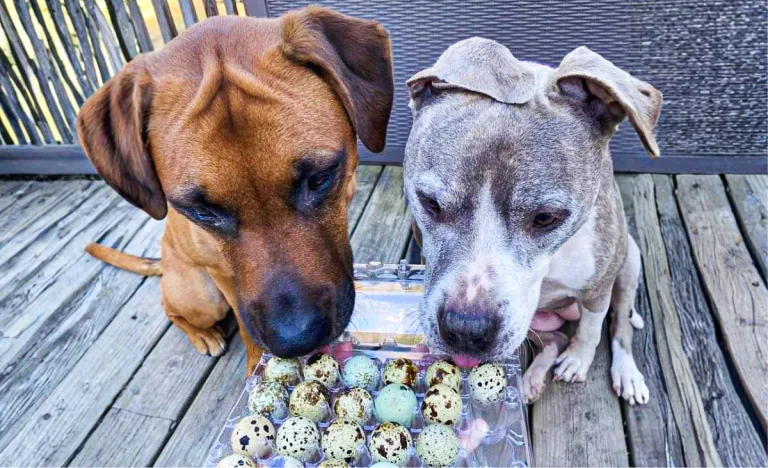
From June 1st through September 30th, I steam roughly 500 quail eggs a week for our (locally) famous pickled eggs. When you’re steaming hundreds a week, you see how much a single minute matters. Thirty seconds can shift a yolk from tender to firm, and if you skip the ice bath, the yolks will keep cooking and texture will change.
If you raise Coturnix, you already know how fast these eggs cook. Three quail eggs equal one chicken egg in most recipes, and their smaller size means less margin for error. Steaming helps with peeling, but only if you time it right.
How Long to Steam Quail Eggs
Start your timer once steady steam escapes from under the lid again, usually within 30 to 60 seconds.
- Soft yolk with set whites: 3 minutes
- Medium yolk with slight creaminess: 4 minutes
- Fully set yolk for slicing: 5 minutes
- Extra firm for pickling: 6 minutes
Use a timer and remove the lid immediately when time is up. The eggs keep cooking under that lid.
Quail eggs vary in size depending on breeding line and age of the hen. Standard-sized eggs follow the timing above. Larger eggs may need up to 30 seconds more. If you are unsure why some eggs run slightly larger or thicker shelled, I explain that in more detail in how egg size and shell thickness can vary in Coturnix.
How to Set Up Steam Properly
The setup is straightforward, but don’t skip steps.
Add about 1 inch of water to the bottom of your pot. The water should stay below the basket and never touch the eggs, even at full boil. Bring the water to a full boil before placing the eggs in the basket. You can stack them. Just avoid piling them high enough to block steam flow. My 6-quart pot with a full-width basket holds about 80 eggs.

Place the lid on tightly. When steam begins flowing again from under the lid, start your timer.
Remove the eggs immediately when time is up and transfer them to an ice bath.
Correctly Setting Up an Ice Bath
Don’t skip the cooling step. You want to use a bowl filled with cold water and several ice cubes so the temperature drops quickly. The ice bath should drop the temperature fast. If the water turns lukewarm, add more ice.
Leave the eggs in ice water for at least 5 minutes. If you are peeling immediately, 5 to 7 minutes is usually enough. If you plan to peel a larger batch, you can leave them submerged for up to 10 minutes. The cold water stops the cooking process and helps the egg white contract slightly away from the shell. That’s the difference between fighting the shell and having it slip off.
Does Steaming Make Quail Eggs Easier to Peel?
It can, but it does not fix every peeling problem. Freshness still matters.
Fresh Eggs vs Aged Eggs
Eggs laid the same day are harder to peel whether you boil or steam them. In my experience, eggs that are three to five days old peel more cleanly than eggs laid that morning. The internal pH rises slightly as the egg rests, and the membrane releases more easily from the shell.
If you are holding eggs before cooking, make sure they are stored properly. Here is a clear guide on how to store quail eggs safely before cooking so they age correctly without losing quality.
Why Steam Helps
Steam surrounds the shell without the eggs bouncing against the bottom of the pot. There is less impact cracking and slightly more even heat around the shell. It lowers the chance of pulling chunks of white off with the shell.
After steaming, submerge the eggs in ice water for at least 5 minutes. For larger batches, I leave them in ice for 7 to 10 minutes. The cold water stops them from cooking any further.
Steam vs Boil: Which Should You Use?
Steaming reduces shell impact because eggs are not rolling in water. It can improve peeling consistency, especially for eggs that are not brand new. With boiling, you can see exactly what’s happening.
Side by side, they look the same. Cut them open and you won’t see much difference. You’d be hard pressed to tell them apart.
I’ve also written out the exact boiling times for quail eggs if that’s your preference.
Common Problems When Steaming Quail Eggs
If your steamed eggs did not turn out as expected, look at these variables first.
Yolks that are gray around the edges were exposed to heat too long or left covered after the timer ended. One extra minute at steam temperature is enough to firm a previously creamy yolk. Rubbery whites usually appear when eggs cook past 6 minutes or sit in hot steam without being cooled quickly. Peeling difficulty is most often tied to freshness, not method. Same-day eggs are harder to peel, even when steamed.
Frequently Asked Questions
If you are new to steaming quail eggs, these are the questions that come up most often.
Steam for 5 minutes once steam resumes under the lid for fully set yolks. For very firm pickling eggs, extend to 6 minutes and cool immediately.
Yes. The shell holds internal heat for several minutes. Cooling in ice water for at least 5 minutes stops carryover cooking and improves peeling.
Yes. I steam them cold from the refrigerator regularly. Just make sure the water is already boiling before placing them in the basket.
Steaming often reduces sticking, but egg age still plays the biggest role. Three to five day old eggs peel more cleanly than same-day eggs.
I fit about 25 standard-sized eggs in my 2.5-quart saucepan and about 80 in my 6-quart stockpot.
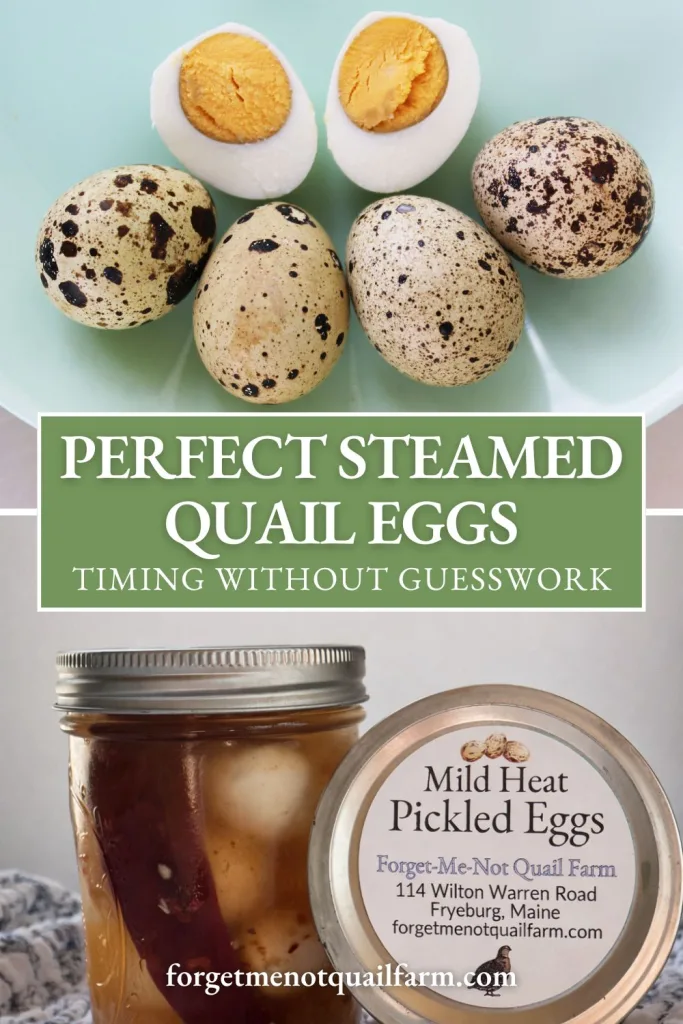
Follow the timing and you’ll be fine. Start the clock when steam resumes and cool them quickly. At the scale I work with each summer, those small details are what keep hundreds of eggs consistent week after week.
Run a small test batch, adjust by thirty seconds if needed, and write down what works for your eggs. Once you’ve done it a few times, the timing becomes second nature.