How Long to Boil Quail Eggs for Perfect Yolks
After boiling thousands of quail eggs over the years, I can tell you that thirty seconds matters. Sometimes it’s less than a minute between creamy and chalky.
If you raise Coturnix, you already know how small these eggs are. Three quail eggs equal one chicken egg in most recipes. That smaller size means they cook faster, and if you treat them like chicken eggs, you are very likely to overcook them.
Stick to these minutes and you’ll be fine.
How Long to Boil Quail Eggs
These times begin once the water returns to a steady boil after you add the eggs.
- Soft yolk with set whites: 2 minutes
- Medium yolk, slightly creamy center: 3 minutes
- Fully set yolk, tender not chalky: 4 minutes
- Extra firm for pickling: 5 minutes
Timing matters. Do not guess. Use a timer.
Quail eggs vary slightly in size. If you are working with larger eggs, you may need an extra 15 to 30 seconds. If you are unsure about size differences, I explain that in more detail in why quail egg size can vary.
Step-by-Step Method for Boiling Quail Eggs
This is the method I use when I want smooth whites and predictable yolks.
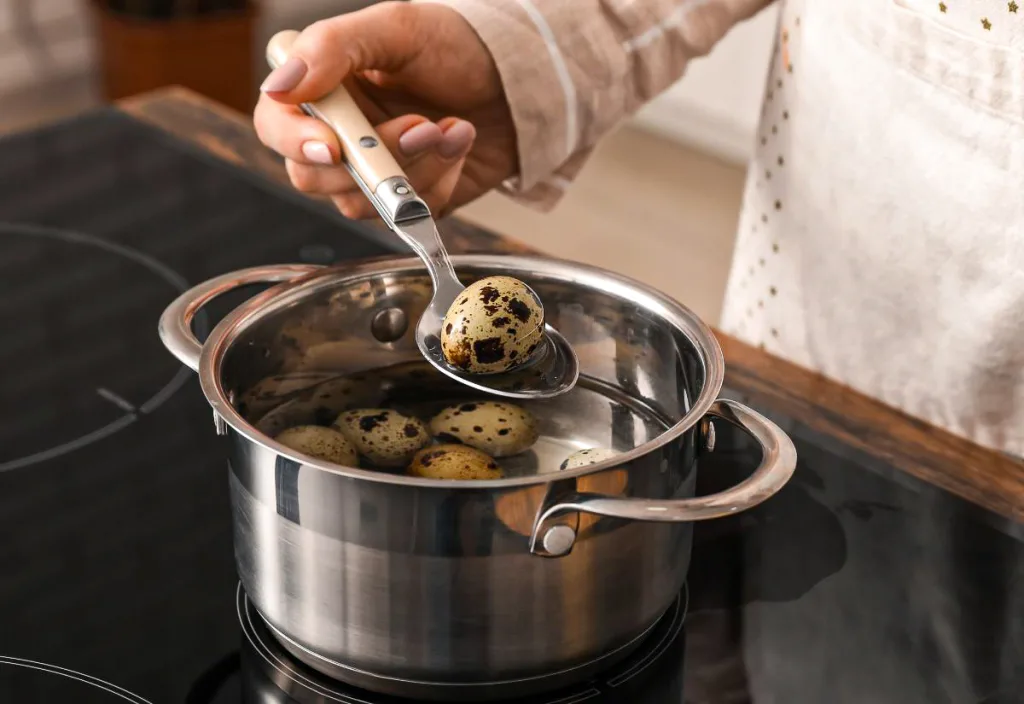
Fill a pot with enough water to cover the eggs by at least one inch. Bring the water to a steady boil, not a violent rolling boil that slams the shells around. Once boiling, gently lower the eggs in using a spoon. Do not drop them.
When the water returns to a steady boil, start your timer based on the doneness you want. Keep the lid off. Crowding the pot can drop the temperature too much, so avoid stacking eggs if possible.
As soon as the timer ends, transfer the eggs directly into an ice bath.
Ice Bath and Peeling: What Makes the Difference
How you cool them matters just as much as how long you boil them. You want to use a bowl filled with cold water and several ice cubes so the temperature drops quickly.
How Long to Leave Quail Eggs in Ice Water
Leave the eggs in ice water for at least 5 minutes. If you are peeling immediately, 5 to 7 minutes is usually enough. If you plan to peel a larger batch, you can leave them submerged for up to 10 minutes. The cold water stops the cooking process and helps the egg white contract slightly away from the shell. That’s what helps the shell release and peeling easier.
Why Fresh Quail Eggs Are Harder to Peel
Very fresh eggs are the most frustrating to peel. When an egg is freshly laid, the internal pH is lower and the membrane adheres more tightly to the shell. In my experience, eggs that are three or more days old peel far more cleanly than eggs laid the same morning.
If your eggs were laid yesterday, expect them to be harder to peel. Letting them rest 3 to 5 days in the refrigerator can make a noticeable difference. If you are unsure about handling and storage, review how to store quail eggs properly so they age safely before cooking.
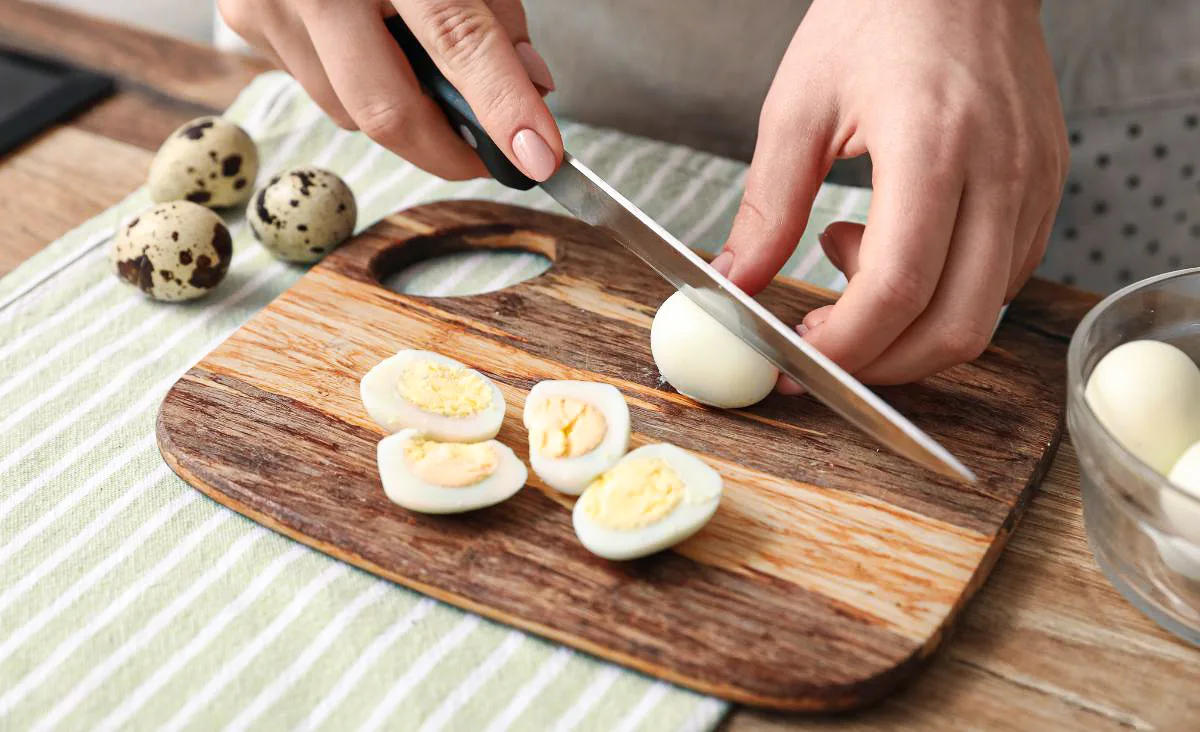
To peel, gently tap the wider end first where the air cell sits. Roll the egg lightly on the counter to crack the shell evenly, then peel under running water to rinse away fragments.
Cold Start vs Boiling Start
Starting cold can is easier on shells, but not as precise. Place the eggs in cold tap water, then bring everything up to a boil together. Once the water reaches a full boil, reduce to a simmer and cook for 3 to 4 additional minutes. It works, but the yolks are not always consistent.
I prefer lowering eggs into already boiling water. It gives you better control over doneness, especially when preparing eggs for deviled recipes or pickling where consistency matters.
Common Problems and How to Fix Them
If they didn’t turn out how you expected, it’s usually one of these:
- Overcooked yolks that turn gray around the edges are the result of too much time in hot water. If you see gray around the yolk, they stayed hot too long.
- Rubbery whites usually show up when eggs cook beyond 6 minutes or sit in hot water after the timer ends.
- Cracked shells usually happen when eggs are dropped into the pot or when the boil is too aggressive.
- Peeling disasters are almost always caused by very fresh eggs or skipping the ice bath because overcooking can also tighten membranes and worsen peeling.
If you are working with fertile eggs from your own covey and wondering whether that changes anything, it does not affect boiling time. If that topic comes up for you, here is more detail on whether fertile quail eggs are safe to eat.
Frequently Asked Questions
These are the questions I get asked the most.
For a fully set yolk that is not chalky, boil for 4 minutes after the water returns to a steady boil. For very firm eggs intended for pickling, extend to 5 minutes.
Yes. Quail eggs are much smaller. In most recipes, three quail eggs equal one chicken egg. They cook in roughly half the time of a standard large chicken egg.
You can, but it is not necessary for proper cooking. A splash of vinegar may help if a shell cracks, but it does not significantly change peeling results.
Unpeeled boiled quail eggs will keep for up to one week in the refrigerator. Peeled eggs are best used within 3 to 5 days. Store them in an airtight container.
Yes. I boil them cold from the refrigerator regularly. Just lower them gently into boiling water to prevent cracking from sudden impact.
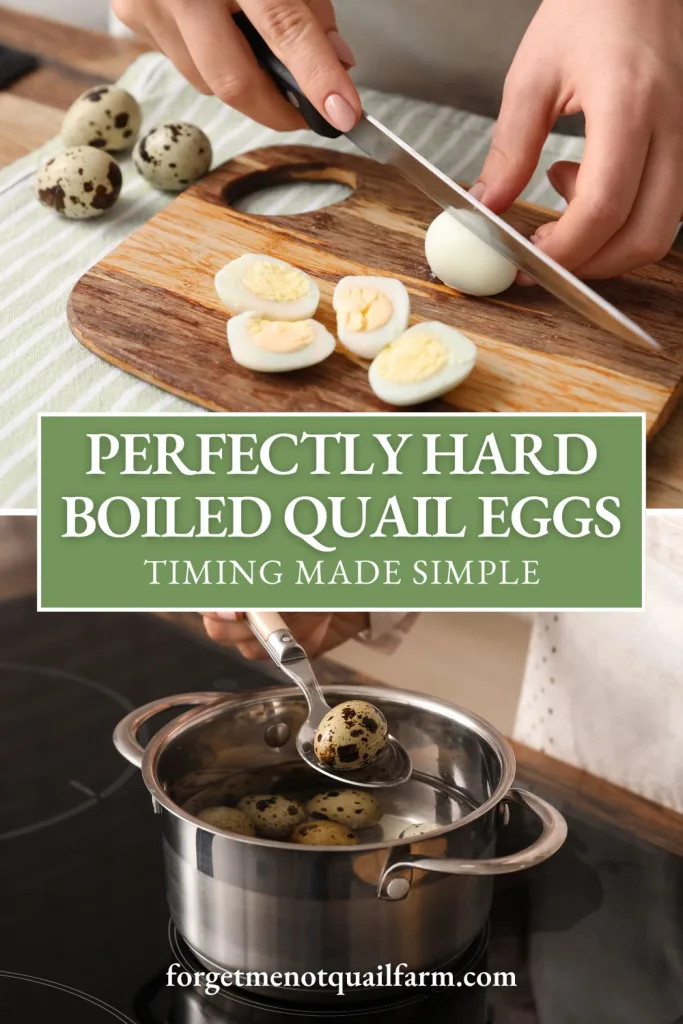
With quail eggs, timing is everything. Because they are smaller than chicken eggs, precision matters. Use a timer, keep the boil steady, and cool them fast.
If peeling is your biggest frustration, boiling is not your only option. I walk through a method that consistently releases the membrane more cleanly in this guide on how to steam quail eggs for easier peeling, including exact timing and batch adjustments.
If this is your first season, you’re going to cook a lot of eggs. Stay within the timing window and cool them immediately.