
How Much Feed Do Coturnix Quail Eat Each Week?
If you’re new to Coturnix quail, feed can feel weirdly hard to estimate. One day it looks like they barely made a dent. After managing both small coveys and larger hatchery groups, I don’t judge feed use by an empty feeder alone. I look at what went into the feeder, what’s left in it, and how much crumble ended up underneath.
We’ll start with the simple per-bird number, then turn it into weekly feed amounts you can use when you’re buying feed. I’ll also cover why your numbers may run higher or lower, and how to tell whether your birds are eating the feed or dumping half of it on the floor.
How Much Feed Does an Adult Coturnix Quail Eat?
For planning purposes, I use about 1 ounce of feed per adult Coturnix quail per day. That means each adult bird eats about 7 ounces of feed per week, or just under half a pound. Your birds may eat a little more or less than that, but it’s a good number to use when you’re deciding how much feed to buy.
If you keep smaller adult Coturnix, you may see intake closer to 0.7 or 0.8 ounces per bird per day. For jumbo birds, steady laying hens, or birds kept through cold weather, I’d plan closer to 1-1.25 ounces per bird per day.
Do not use the adult chart for newly hatched chicks. They eat very little during the first few days, but their intake climbs fast by the second and third week. That’s why a brooder full of tiny chicks can go from barely eating to draining the feeder pretty fast. If you need a deeper breakdown of feeding by age, I’d send you to what to feed Coturnix quail chicks vs. adults so this post can stay focused on feed amounts instead of becoming a full diet guide.
Weekly Coturnix Quail Feed Chart
The easiest way to estimate feed is to start with your bird count. Use this formula:
Number of adult quail × 1 ounce per day × 7 days = ounces of feed per week
Then divide by 16 to convert ounces to pounds.
Here’s how that looks for common covey sizes:
| # Adult Quail | Feed per Day | Feed per Week | Feed per Month |
|---|---|---|---|
| 6 | 6 oz | 2.6 lb | 11.25 lb |
| 12 | 12 oz | 5.25 lb | 22.5 lb |
| 20 | 20 oz | 8.75 lb | 37.5 lb |
| 30 | 30 oz | 13.1 lb | 56.25 lb |
| 50 | 50 oz | 21.9 lb | 93.75 lb |
| 100 | 100 oz | 43.75 lb | 187.5 lb |
These numbers are estimates, not a feed bill written in stone. If your 12-bird covey goes through a little more than 5 pounds a week, that may be perfectly normal. If they’re blowing through 10 pounds a week, I’d look at the feeder setup before blaming their appetite.
A 40-pound bag of feed contains 640 ounces. A 50-pound bag contains 800 ounces. Using the 1-ounce-per-bird-per-day estimate, a 50-pound bag should last about 133 days for 6 adult quail, 66 days for 12 adult quail, 40 days for 20 adult quail, or 16 days for 50 adult quail.
If you only keep 6 to 12 quail, a 50-pound bag can last long enough that you need to think about storage. Dry, rodent-proof storage matters just as much as buying the right amount. A larger egg or breeding setup can go through feed quickly, especially once you include chicks, growers, and extra breeding groups.
Why Your Covey May Eat More or Less
Your covey may not match the chart exactly, and that’s normal. Feed intake changes with bird size, age, weather, egg production, feeder design, and how much feed ends up outside the feeder.
Bird Size and Production Level
I would not expect a jumbo laying covey to eat the same amount as a smaller standard-size covey. Bigger birds need more feed to maintain body condition, and hens that are laying steadily need enough nutrition to keep up with egg production. A cock that is maintaining his body weight may not eat quite as much as a hen laying steadily. I would not worry about that by itself if the birds are active, eating evenly, and not feeling sharp through the breast when you handle them.
Protein Percentage and Feed Quality
For mature laying Coturnix, I use a complete layer feed in the 17-20% protein range. That gives laying hens enough support without keeping adult birds on high-protein starter forever. Protein matters because these birds go from hatch to laying age fast. Hens can start laying around 6 to 8 weeks old, and once they’re laying regularly, their bodies need steady nutrition. If the feed is not meeting their needs, you may see poor production, thin birds, weak shells, or birds that do not hold condition even with feed available.
That doesn’t mean adult birds should stay on the highest-protein feed you can find. Chicks need higher-protein starter feed while they are growing fast, but mature laying birds need a balanced adult diet with enough protein and calcium. If you want to go deeper into that piece, I explain it more in why protein matters so much for Coturnix quail.
Weather, Season, and Stress
Here in Maine, I expect feed use to rise some in cold weather, especially for birds in outdoor or unheated sheltered setups. Cold birds have to work harder to stay warm, so I plan a little extra feed in winter.
Hot weather can reduce feed intake. Birds may eat less when it’s very warm, even though laying hens still need enough calcium and nutrition to keep their bodies working well. A stressed covey may eat less for a day or two, or some birds may get pushed away from the feeder. After moves, introductions, predator pressure, or fighting, I pay closer attention to both feed use and body condition.
A one-day change doesn’t always worry me. A pattern does. If your covey suddenly stops eating normally, acts dull, loses weight, or has a drop in egg production, that is worth paying attention to.
How to Tell If Your Quail Are Eating Feed or Wasting It
I do not recommend open dishes for adult Coturnix unless you enjoy sweeping up feed. They can shovel crumble out, step in it, scratch near it, and dump a surprising amount into bedding or manure trays. Then the feeder looks empty, but the birds didn’t eat all of it. If your weekly feed use seems too high, look under and around the feeder. If you see a pile of crumble, powder, or half-eaten feed below it, you’re measuring feed disappearance, not feed intake.
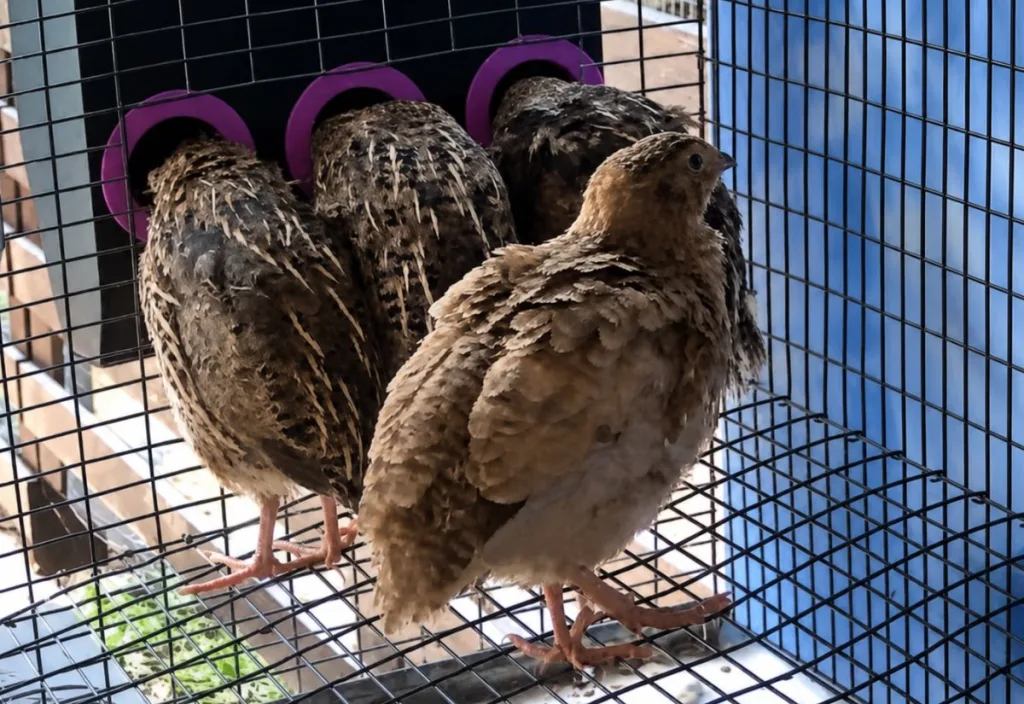
Feeder height matters. Port size matters. The amount of open access matters. A feeder that works beautifully for chickens may be a disaster for quail because quail are smaller, closer to the ground, and much more likely to waste fine crumble if they can get their whole head or body into it. For wire cages or hutches, I’d look for an outside-hanging no-waste quail feeder with ports sized for adult Coturnix, because that setup helps limit billing and keeps the feeder out of the usable cage space.
For a simple check, measure feed for 7 days. At the end of the week, compare what went in, what is still in the feeder, and what landed underneath.
If you’re still setting up and trying to make sure you have the basics covered before bringing birds home, my Beginner’s Coturnix Quail Supply List in the free Resource Library can help you plan the essentials without buying random gear you will replace later.
Keeping Feed Costs Practical
Knowing your weekly feed use helps you buy smarter and avoid running out at the worst possible time. For most keepers, a complete feed should still be the foundation. I’m fine with homegrown extras, but I would not use them as the main diet for laying Coturnix. It is too easy to create protein, calcium, or mineral gaps. I go into that more in ways to grow some of your own quail feed without overcomplicating it. Quail are small, fast-growing, high-output birds, and it doesn’t take much to create gaps in their diet.
The first money-saving step is not growing extras. It’s keeping feed off the floor.
Frequently Asked Questions
Still wondering if your covey is eating a normal amount? These are the questions I hear most often from new keepers trying to make sense of feed use.
Twelve adult Coturnix quail eat about 5.25 pounds of feed per week. Jumbo birds, cold weather, and heavy laying can push that number a little higher.
Twenty adult Coturnix quail eat about 8.75 pounds of feed per week. A 50-pound bag should last about 40 days if waste is low.
Yes. Adult Coturnix usually do best with steady access to a complete feed.
Most of the time, it’s feed waste. Check under the feeder for crumble, powder, or spilled feed.
Usually, yes. Jumbo Coturnix are larger birds and often eat more than standard-size Coturnix.
For adult Coturnix quail, plan on about 1 ounce of feed per bird per day, or about 7 ounces per bird per week. That gives you a simple starting point for estimating feed costs, planning bag purchases, and checking whether your covey’s feed use makes sense.
Some coveys will land a little under that number and some will run higher, but if you start with 1 ounce per adult bird per day, you will have a number you can work from. Once you know your baseline and watch for waste, you can plan feed without staring at the bag and hoping it lasts. Keep an eye on what goes into the feeder, what ends up on the floor, and how your birds look and behave. That’s how you figure out what your birds are really using, not just what vanished from the bag.


