What to Do When You Have Too Many Male Quail
If you hatch Coturnix quail long enough, extra cocks are going to happen. I don’t care how carefully you plan, how hopeful you are, or how nicely you ask the incubator to give you hens. A hatch is usually going to give you both sexes, and sometimes it feels like every bird in the brooder grows up with a tiny crow and an attitude problem.
I’ve raised Coturnix quail in small backyard setups and larger hatchery groups, and extra cocks are one of those problems that sneaks up fast. One week they look like awkward half-grown chicks, and the next week you’re dealing with chasing, fighting, bald hens, and one bird acting like he owns the entire pen. The sooner you make a plan, the less likely you are to end up with stressed hens or injured birds.
So let’s talk through what’s normal, what’s a red flag, and what you can do when a hatch gives you more cocks than you planned for.
Why Extra Male Quail Become a Problem So Quickly
Coturnix quail mature fast. That is one of the reasons they’re so useful on a small homestead, but it also means you don’t get a long grace period before young cocks start acting like young cocks. Most Coturnix quail are mostly feathered by about 3 weeks, fully feathered by about 4 weeks, and moving quickly toward maturity after that. Depending on the line, feed, lighting, and individual bird, sex-based behavior can start showing up around 4 to 6 weeks. By 6 to 8 weeks, many Coturnix are sexually mature. That’s why I don’t wait too long to start sorting. The sweet little chick stage goes by fast.
Extra cocks can turn a calm pen into a rough one pretty quickly. They may chase hens, overbreed them, pull feathers, scalp them, fight with each other, guard feed or water, or keep the whole covey unsettled. Sometimes the first sign is not a dramatic injury. It may just be hens hiding, birds piling into corners, rough-looking backs, or one cock that seems to be constantly on patrol.
This is why I don’t recommend waiting to “see how it goes” once you know you have too many cocks. Give them a little time to settle if things are mild, but don’t wait around while the same birds keep getting picked on. If fighting has already started, read what causes Coturnix quail to fight and how to fix it before you keep moving birds around.
How Many Cocks Should You Keep?
For most small breeding groups, a good starting point is one cock to about 4 or 5 hens. That ratio tends to keep fertility decent without wearing the hens out. You don’t need a cock for eating eggs. Hens lay eggs whether there’s a cock in the pen or not. You only need a cock if you want fertile eggs for hatching.
More cocks don’t automatically mean better fertility. This is an easy mistake to make when you’re trying to improve fertility. A pen with too many cocks may still produce fertile eggs, but it can also produce stressed hens, damaged feathers, fighting, and a covey that never settles down.
On the other side, too few cocks can lower fertility, especially if the cock is older, less active, injured, timid, or in a larger setup where he doesn’t cover the hens evenly. That doesn’t mean you should toss in extra males “just in case.” It means you need to be picky about which cocks stay.
A good breeding cock should be healthy, active, structurally sound, and not overly rough. In color-focused breeding groups, he also needs to fit your genetics goals. The prettiest bird in the pen is not always the best breeder if he is hard on hens or constantly fighting.
Your Realistic Options for Extra Male Quail
Once you know you have too many cocks, it’s time to make a real plan.
Process Extra Cocks for Meat
For many people who hatch Coturnix regularly, processing extra cocks is the most practical option because there usually is not enough demand or housing space for every male that hatches. For a lot of small quail setups, extra males are the birds that become meat birds. Hoping they all find pet homes is usually not a plan. It sounds nice, but it usually leaves you feeding birds you don’t have room to keep.
Many keepers process extra cocks around 6 to 8 weeks, which lines up with the age when Coturnix are mature enough to be causing problems but still young enough that you are not feeding them for months with no plan. Jumbo lines may be worth growing a little longer if you want more size, but every extra week means more feed, more space, and more management.
If you’re raising extra cocks for meat, keep them on appropriate feed while they grow. Young Coturnix need higher protein than mature laying birds. A game bird or turkey starter is commonly used for chicks and grow-outs, while mature laying and breeding coveys generally do well in the 17-20% protein range. Don’t switch growing meat birds to low-protein chicken layer feed just because it’s cheaper. Feed quality affects growth, condition, and how well they finish.
Sell or Rehome Extra Cocks
Selling or rehoming extra cocks can work, but it’s usually harder than selling hens. That is just the reality of quail. Most buyers want hens for eggs or balanced breeding groups. Extra cocks may be useful to someone who needs a backup breeder, wants fresh genetics, is building a color project, or raises quail for meat. But the demand is limited.
If you list extra cocks, be clear that they are male right in the title or first sentence. I would say something like “extra Coturnix cocks available” or “male Coturnix quail for breeding or meat.” Do not call them “assorted adults” or “mixed quail” if you know every bird in the group is male. That just pushes the problem into someone else’s pen.
I’d also be realistic about what they are worth in your local market. Extra cocks are not worth the same as laying hens in most markets. That doesn’t mean they have no value, but it does mean you need to price and describe them honestly.
You also need to pay attention to local rules and platform rules. Some places don’t allow animal sales, livestock listings, feeder animal language, or certain wording. Check the rules first so you don’t waste time writing a listing that gets removed.
Keep a Bachelor Pen
A male-only pen can work in some situations, but I’d never present it as guaranteed. Bachelor groups have the best chance when the cocks were raised together. They also need space, no access to hens, and close watching. Once hens are nearby, or once the males have already started serious fighting, the odds get worse.
Watch for chasing, feather pulling, head wounds, one bird hiding, one bird guarding food or water, or a cock that keeps getting pushed away from the group. If you’re seeing injuries or constant chasing, the bachelor pen is not working.
Keep a Backup Breeder
Keeping one or two backup cocks can be smart if you’re breeding Coturnix. I do this because things happen. A cock can age out, become infertile, get injured, die unexpectedly, or turn out to be too rough with hens. That doesn’t mean you need to keep every extra male “just in case.”
Don’t lower your standards just because he’s “only” a backup. Look for good size, clean movement, no obvious defects, steady condition, and behavior you’d want more of. If he is always fighting, stressing hens, or guarding the pen like a tiny tyrant, I would not keep him just because his color is nice.
You also need a place to house him. A backup breeder still eats, crows, needs space, and needs management. If you don’t have a safe setup for him, he is not really a backup plan.
What Not to Do with Extra Male Quail
There are also a few things you absolutely should not do with extra cocks:
- Do not release domestic Coturnix quail. They are not wild birds, and turning them loose is not a humane rehoming plan. Most will not survive well, and releasing domestic birds can create legal, welfare, and ecological problems.
- Do not keep a 1:1 ratio and hope everyone settles down. Sometimes young birds look fine for a short window, but once maturity kicks in, too many cocks can turn the pen into a mess.
- Do not leave injured birds in the same group to “see if they work it out.” If a bird is bleeding, scalped, limping, hiding, or being repeatedly targeted, separate the bird and reassess the setup.
- Do not add more cocks because you think it will increase fertility. If your ratio is already reasonable and fertility is poor, look at age, health, lighting, feed, space, stress, and whether the cock is doing his job before adding more males.
How to Plan for Extra Cocks Before You Hatch
The best time to plan for extra cocks is before the eggs go into the incubator or before you bring home those adorable day-old chicks. Assume that roughly half the chicks may be male. You might get luckier than that, but I wouldn’t build my whole plan on luck.
If you’re hatching for replacements, meat, or sales, write down your plan before hatch day. Coturnix eggs usually hatch around day 17, so the grow-out setup needs to be ready before the chicks are even out of the shell. Before hatch day, know your limits. How many cocks can you keep? How many grow-outs can you house? What happens to the extra males once you know they are male? That doesn’t make every decision easy. It just keeps you from making every decision in panic mode after somebody gets hurt.
Frequently Asked Questions
Extra cocks bring up a lot of very normal beginner questions. Before you start shuffling birds from pen to pen, these are the big things to know.
Sometimes. Male-only groups work best when the birds were raised together, have enough space, and are kept away from hens. If one cock is hiding, bleeding, or being chased off feed and water, the group is not working.
No. Hens lay eating eggs without a cock. You only need a cock if you want fertile hatching eggs.
For most small breeding groups, one cock to 4 or 5 hens is a good starting point. You may adjust from there based on fertility, temperament, and your setup.
Start watching closely around 4-6 weeks. By 6-8 weeks, many Coturnix are sexually mature, and extra cocks can start causing bigger problems.
Sometimes, but they’re usually harder to sell than hens. Be clear that they are males and price them realistically.
Short-term separation is sometimes necessary for safety or healing. Long-term, it depends on the bird, but a solo cock should be watched for stress and condition.
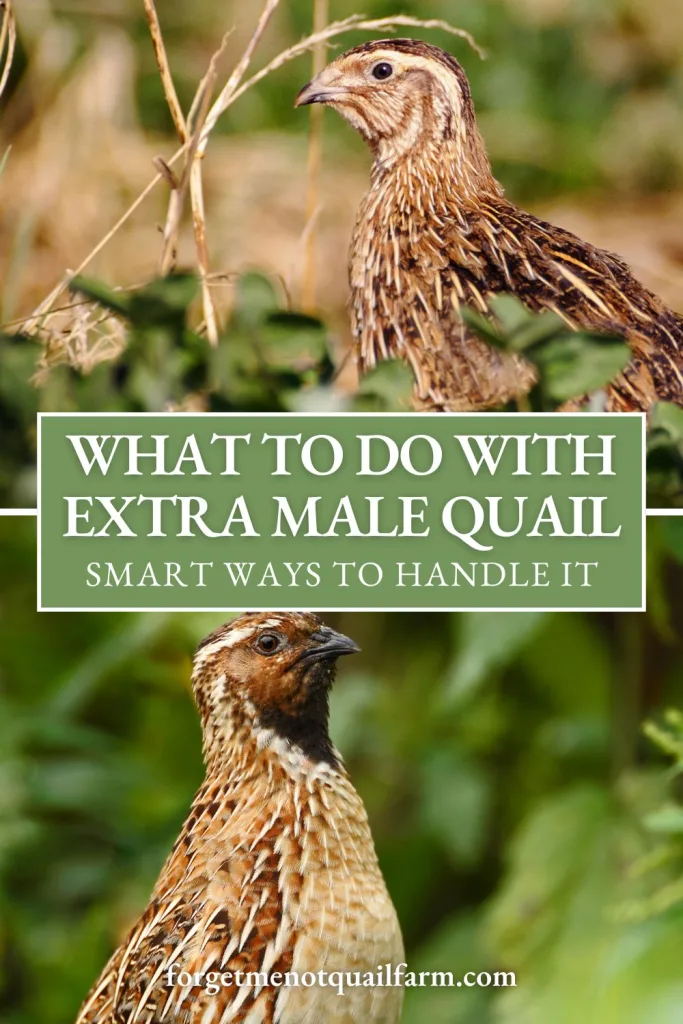
Extra male Coturnix quail are not a rare problem. They’re part of hatching, especially if you raise straight-run chicks or hatch your own replacements. If you feel overwhelmed the first time you realize half your grow-outs may be male, you’re not the only one. Start by separating the problem birds, checking your ratio, and deciding which cocks are worth keeping.
Plan before you hatch, sort before things get rough, and pay attention to what your birds are showing you. A calmer covey usually comes from making decisions early, not waiting until there is chasing, stress, or blood in the pen. It is not the part people get excited about, but it is part of responsible quail keeping.