Pharaoh Coturnix Quail Explained for Beginners
When I started raising Coturnix quail back in 2013, I had 20 birds that were the basic brown I had seen whenever I read about Coturnix. They were “just quail” that grew out quickly and started laying young. I didn’t know they came in other colors until 2019, when an ordering mistake led to hatching eggs that produced a range of different colors. That’s when my zoological background kicked in. I love genetics!
There are a lot of color, diluter, and pattern combinations in Coturnix. But they all come back to those basic brown birds I started with. Those little brown birds are Pharaohs. Once you understand Pharaoh, you can start seeing how other colors are created and combined.
Let’s look at what Pharaoh quail are, how to spot a good one, and why they matter so much in breeding.
So What Is a Pharaoh?
When you hear Pharaoh, you are not looking at a mutation or a specialty line. You’re looking at the base color the other colors build off of.
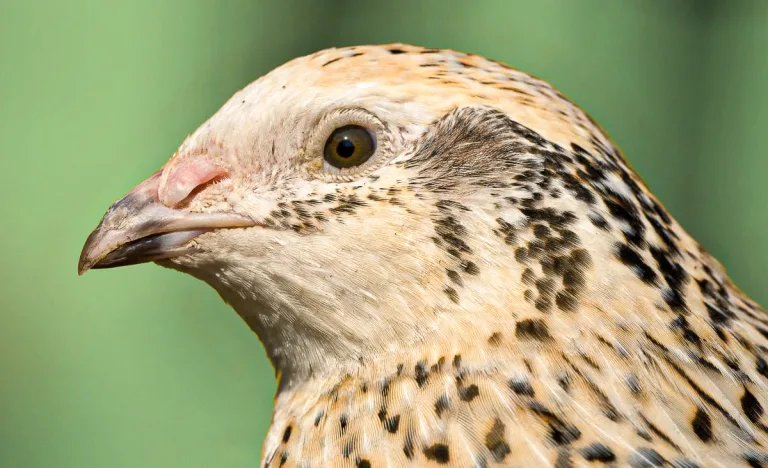
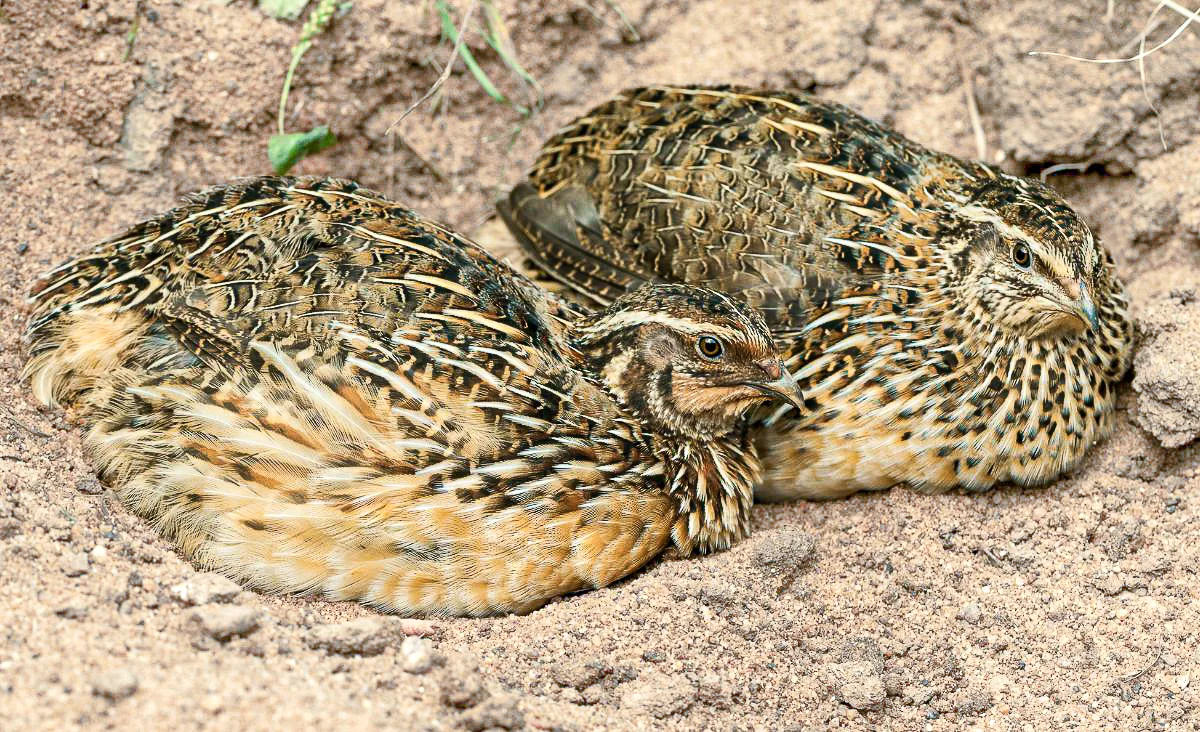
Pharaoh is the wild-type plumage of Coturnix japonica. It is what the bird looks like without any added color genes changing it. Every other color you see builds off this base in some way. Once you start working with different lines, you need something to compare everything back to. Pharaoh is that point.
A lot of people are talking about the same bird but using different terms. In most backyard setups and even some sales listings, the terms Wild-type, Brown, and Pharaoh are used interchangeably.
- Wild-type is the scientific term for the natural coloration
- Pharaoh is the breeder term for that same base color
- Brown is the casual, everyday name most people use
What a Good Pharaoh Should Look Like
At a glance, Pharaoh quail all look similar. Once you’ve handled enough birds, you start noticing the details. This is where you stop just seeing a brown quail and start seeing the pattern.
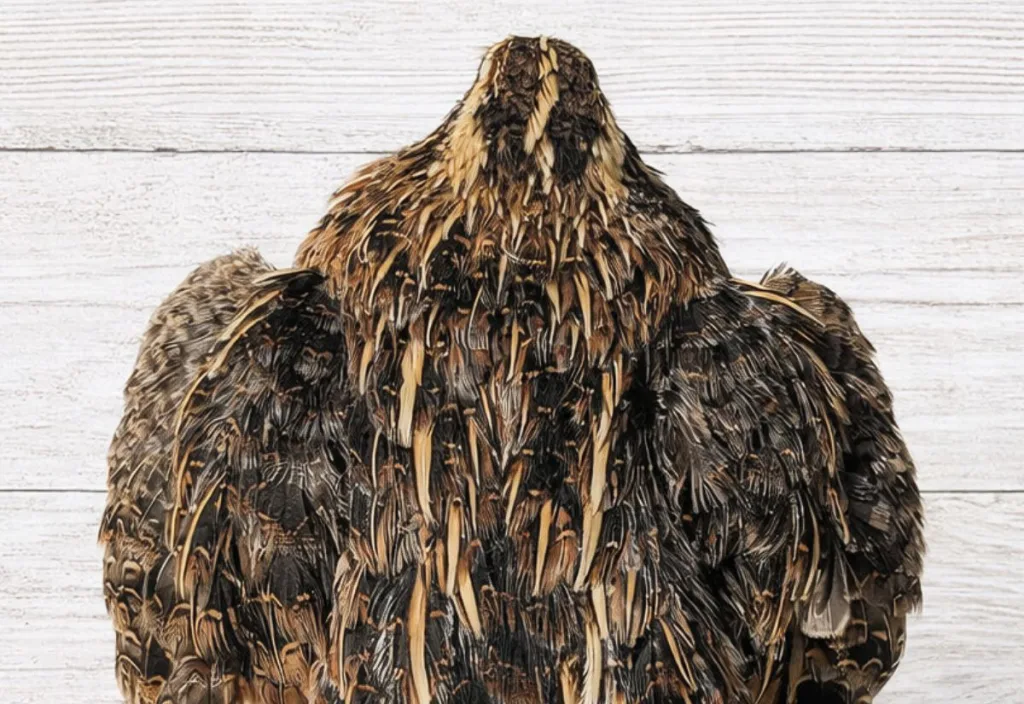
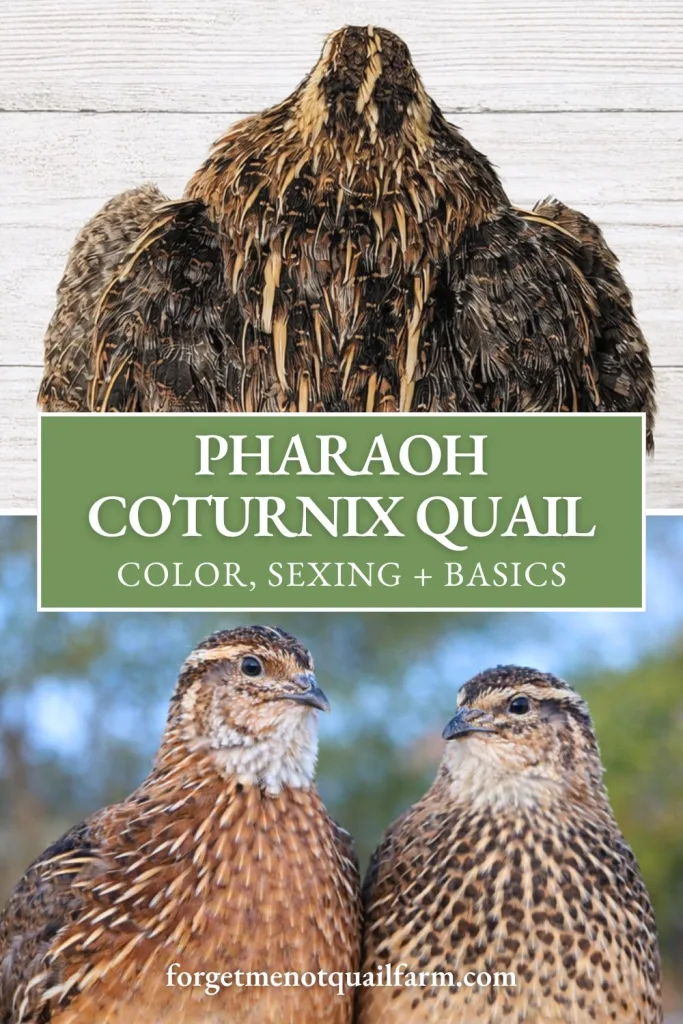
A good Pharaoh should have clean, easy-to-see patterning. The back should show defined striping rather than a muddy blend of color. Individual feathers often have dark spots with noticeable contrast against lighter tones. The wings should look even, not patchy. On the face, you’re looking for a clean mask and a visible light chin strap.
Most backyard birds will not be perfectly marked, and that is okay.
Why Pharaoh Is So Common
One of the biggest reasons Pharaoh is everywhere is how easy it is to sex. By about 3 weeks of age, when quail are mostly feathered, you can tell males from females just by looking at them.
Male Markings
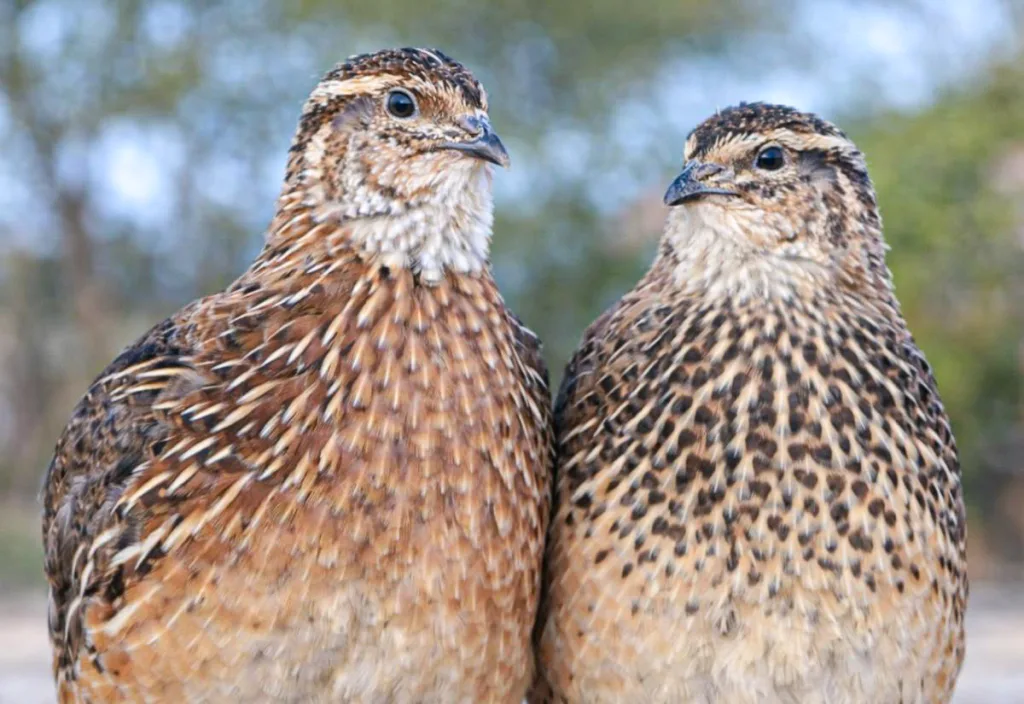
Males tend to have a more defined facial mask. The darker coloring around the face usually looks cleaner and more solid. The white chin strap is often thinner and more distinct on males. They develop a solid rust-colored chest with no spotting. The rust tones on the chest often carry slightly into the neck and upper body, giving them a warmer look overall.
Female Markings
Females have a lighter tan face. They keep a lighter chest with distinct black speckling.
If you’re unsure at 3 weeks, wait a few days. By the time they are fully feathered at 4 weeks, the difference between males and females is usually obvious.
Once you know who’s who that early, it’s a whole lot easier to stay ahead of the trouble. You can separate cocks before aggression ramps up, plan breeding groups sooner, and decide which birds you want to grow out. That early sexing is a big reason Pharaoh never really stopped being popular.
Let’s Talk About Sex-Linked Brown (SLB)
Spend enough time talking quail color, and you’re going to hear about Sex-Linked Brown. SLB is a gene that creates a slightly lighter brown tone. In some birds, it can make the pattern look softer or less defined. It is common in many U.S. lines, especially older or mixed backyard stock.
It explains some of the difference between a sharp-looking Pharaoh and one that looks softer. If you are breeding for pattern clarity, it becomes something you manage over time. If you are focused on eggs or meat, it is usually a non-issue.
You cannot reliably identify SLB by looking at a bird. You will see claims about certain markings or tones being “proof,” but the only way to confirm SLB is through controlled breeding over multiple generations.
Using Pharaoh in a Breeding Program
Pharaoh is predictable because it is the foundation everything else is built off of. When you pair two clean Pharaoh birds without hidden genes, they will consistently produce Pharaoh offspring. They “breed true.” Once you introduce other genes, you are modifying that base with additional color or pattern traits.
Basic Breeding Results with Pharaoh
These outcomes assume both birds are genetically what they appear to be and not carrying hidden traits.
- Pharaoh x Pharoah = 100% Pharaoh
- Pharaoh x Manchurian = 100% Italian
- Pharaoh x Italian = 50% Pharaoh, 50% Italian
- Pharaoh x Tibetan = 100% Rosetta
- Pharaoh x Rosetta = 50% Rosetta, 50% Pharaoh
Pharaoh is used in advanced breeding programs to test genetics, clean up lines, and make results more predictable.
What Pharaoh Does Not Control
A lot of people assume color and performance go hand in hand, and they don’t. Pharaoh does not control performance. Egg production and growth depend on breeding and care, not color. Pharaoh lines are often associated with strong production because they have been used heavily in performance-focused breeding. That comes from breeding choices, not feather color.
They can lay brown-speckled eggs or blue eggs if they carry the celadon gene.
Frequently Asked Questions
Still have questions? These are the ones I hear most often.
Most of the time, yes. “Brown” is the casual term people use for Pharaoh.
They are used for both, but performance depends on the line and how they were bred, not the color.
No. It’s hard to identify in males and impossible to see in females. It requires breeding to confirm.
Not always, but it is one of the most useful tools for keeping results predictable and understanding what your birds are carrying.
Around 3 weeks, once the chest feathers come in clearly.
Pharaoh are easy to overlook, but they’re one of the most useful birds to understand. They give you a solid place to start if you want to understand color and breeding. When you understand how Pharaoh behaves, how it looks, and how it breeds, the rest of Coturnix genetics becomes much easier to work through.
They also make it easier to build confidence early on. When you can reliably sex birds at 3 to 4 weeks, recognize clean patterning, and understand what “normal” looks like, you spend less time second-guessing your setup.
If you want my opinion, Pharaoh is still the best place to start, even if you want to work with more complex colors and dilutions later.