Finding the Right Coturnix Quail Male to Female Ratio
When I first started raising Coturnix back in 2013, I followed the same advice most people find online. One male to three or four females. It worked, but once I scaled up and started managing larger breeding groups, I learned pretty quickly that the “standard” ratio doesn’t always hold up in real setups.
These days, across coveys ranging from small backyard groups to a working hatchery with a few hundred birds, I consistently land in the 1 cock to 4–6 hens range. It gives me a balance between fertility and keeping the hens in good condition. Push past that, and you’ll usually start seeing lower hatch rates within a week or two of collecting eggs. Go tighter than that, and the hens will tell you right away that something’s off.
I’ll show you how this plays out and what to watch for when it doesn’t.
What Is the Best Male to Female Ratio for Coturnix Quail?
If you just want the number, it’s this… For most setups, a ratio of 1 cock to 4–6 hens works well. Closer to 1:4 tends to give you stronger fertility. Closer to 1:6 can still work, but you’re starting to reach the point where one cock can’t keep up with breeding every hen often enough and hatch rates usually take a hit.
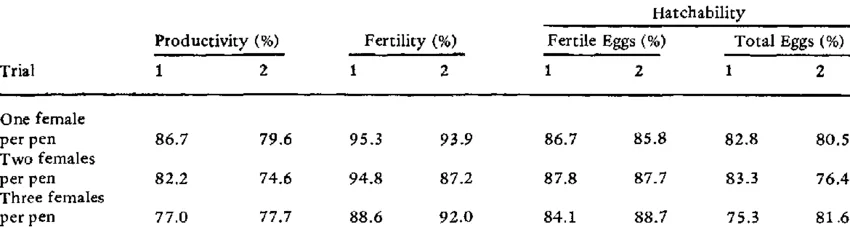
The research lines up with this, even though it focuses on tighter breeding groups than most of us run day to day. Controlled breeding studies have shown that tighter ratios like 1:2 or 1:3 often produce stronger fertility rates. As you add more hens, fertility usually starts dropping. That doesn’t mean 1:4–1:6 doesn’t work. It means you’re trading a bit of peak fertility for a more balanced group.
Why This Ratio Works in Real Setups
You can run tighter groups and get better fertility, but it comes at a cost. You’ll pay for it in hen condition.
Fertility vs. Coverage
A cock can only mate so many hens effectively. In smaller groups, he has more frequent access to each hen, which increases the chances of fertilized eggs. As the number of hens increases, some birds simply don’t get covered often enough. That’s when your hatch rates start bouncing around. You’ll still get some fertile eggs, but not at the level you expect.
Hen Condition and Longevity
Then there’s what happens to the hens. With fewer hens in the group, the cock’s attention gets focused on a smaller number of birds. You’ll usually start seeing wear on hens within a week. That’s why I don’t run breeder groups at 1:2 or 1:3 long term, even though the research supports those ratios for fertility. In a working setup, I’d rather keep hens productive and in good condition than chase a small bump in hatch rate.
What Happens If Your Ratio Is Off
This is the part most people don’t explain well. They give you a number, but they don’t explain what to watch for. Your birds will tell you when something isn’t working.
Too Few Hens
When you don’t have enough hens for the cock, the pressure gets concentrated. You’ll start to see:
- Feather loss on the back of the head and neck
- Worn or bare patches between the wings
- Red or irritated skin where feathers have been rubbed off
- One hen taking the brunt of the attention while others avoid the cock
- Hens acting jumpy or trying to stay out of reach
If you leave it alone, those worn spots often turn into open skin and stress causes a drop in egg production.
Space makes a big difference here. A tight ratio in a cramped pen will show problems much faster than the same ratio in a well-sized enclosure. If you’re seeing these signs, it’s worth reviewing how much space Coturnix quail need in pens and cages and adjusting both ratio and space together.
Too Many Hens
You won’t see this on the birds. You’ll see it in your hatch rates. With too many hens, fertility becomes inconsistent. You may still collect a full egg basket each day, but when you incubate, your hatch rate drops. You might notice:
- Some hens producing fertile eggs while others consistently don’t
- Hatch rates that look fine one week and poor the next
- No visible behavior issues, but disappointing incubation results
That’s because not every hen is getting covered often enough. If you’re unsure whether the issue is fertility or laying performance, it helps to understand how many eggs Coturnix quail typically lay so you can separate production from breeding success.

What Else Affects Whether Your Ratio Works
You can get the ratio right and still run into issues. I’ve seen “perfect” ratios fail because the rest of the setup wasn’t supporting the birds.
Age matters. Coturnix can begin reaching breeding age around 5 to 6 weeks, but you may not see consistent fertility until they’ve been laying for a couple of weeks.
Condition matters. Birds on a proper layer feed in the 17–20 percent protein range maintain better body condition and more consistent reproduction. If nutrition is off, your ratio won’t save you. This is where understanding what to feed Coturnix quail (and common mistakes to avoid) makes a noticeable difference.
Space and structure matter. A group kept at appropriate stocking density behaves very differently than one that’s crowded. Even within the same ratio, a well-spaced covey will have fewer issues and more consistent breeding.
Temperament matters too. Some cocks are just rougher than others. If one bird is causing repeated wear on hens, it may not be a ratio issue at all.
Frequently Asked Questions
Still have questions? Here are a few that come up often when people start dialing in their breeding groups.
In smaller pen setups, I don’t recommend it. Coturnix cocks will compete, and that can turn into fighting, stress, and injured birds pretty quickly. In larger colony-style enclosures with plenty of space and cover, you can sometimes run multiple males, but keep an eye on them.
For pure fertility, 1:3 often performs better. In day-to-day management, 1:4 to 1:6 tends to be easier on the hens and more sustainable over time.
Behavior changes can show up within a few days. Fertility changes take longer. Expect about a week before you start seeing a clear difference in the eggs you collect.
No. If you’re raising quail strictly for meat and not breeding, the ratio doesn’t matter. You can raise all males, all females, or mixed groups without concern for breeding balance.
That’s common when the ratio is too tight or when one hen is lower in the pecking order. Increasing the number of hens or separating the group usually resolves it.
There isn’t a perfect number. It’s about watching your birds and understanding what they’re telling you. For most setups, 1 cock to 4–6 hens gives a reliable balance between fertility and keeping your hens in good condition. From there, small adjustments based on behavior and hatch results will take you the rest of the way.
Some setups let you run tighter ratios, while others need more room to keep hens in good shape. What matters is how they’re holding up over time, not whether you landed on an exact number. Give it some time and you’ll recognize when things are going right.