Is Quail Manure Good Fertilizer? How to Use It in the Garden
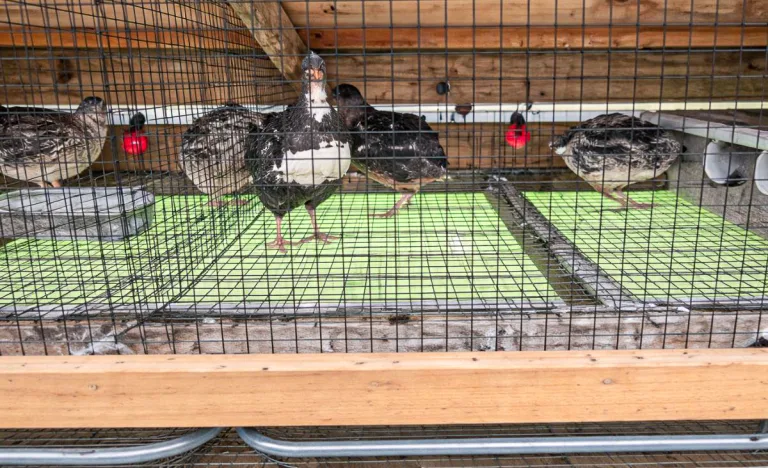
I started raising Coturnix quail in 2013, and one thing you learn fast is that even a small covey produces enough manure and bedding waste to add up quickly. When I had small backyard coveys, cleaning it up was simple. Once I expanded into larger outdoor setups and hatchery pens, I had to be much more intentional about what I did with manure, bedding, feathers, and tray cleanout. That is when I started learning what quail manure could do in the garden, and how important it was not to rush the process.
Quail manure has a place in the garden, but not straight out of the pen. Like chicken manure, it is rich enough to burn plants if it goes straight onto beds before it has broken down. For most backyard keepers, the amount of quail manure is manageable, and once it is composted it is easy to put to good use in the garden.
If you want to use quail manure safely, the main things are composting it properly and not using it too soon.
Why Quail Manure Is Useful in the Garden
Quail may be small, but I still do not treat their manure like something I can toss straight into the garden. The value comes after that waste has broken down with bedding and other compost ingredients into something you can spread without worrying about burning plants.
This post is about using manure in the garden, not about whether the birds themselves belong there. I cover that in my post on whether quail themselves should be in the garden.
This is one of the practical ways quail fit into a homestead routine. You clean the pens, compost the waste, and use the finished material back in the garden. It fits naturally with the larger idea of ways quail fit into a more sustainable homestead system.
Why You Should Not Use Quail Manure Fresh
Fresh quail manure is considered “hot,” which means it is strong enough to damage plant roots and tender growth if it is used before it has broken down. People hear that manure is good for the garden and skip over the composting part, which is where problems usually begin.
If you spread fresh manure directly around vegetables, especially young plants, you can end up with burned roots, stressed seedlings, or a sour, unpleasant mess sitting on the soil surface. Raw manure is also wetter, smellier, and harder to work with than finished compost. Composting takes care of most of that.
What “Hot” Manure Means
In simple terms, “hot” manure has a high enough nutrient load that plants cannot handle it safely in raw form. It is not just a quail issue. Chicken manure is treated the same way for the same reason. The fact that quail are smaller does not make their manure gentle enough to skip composting.
What Counts as Raw Quail Waste
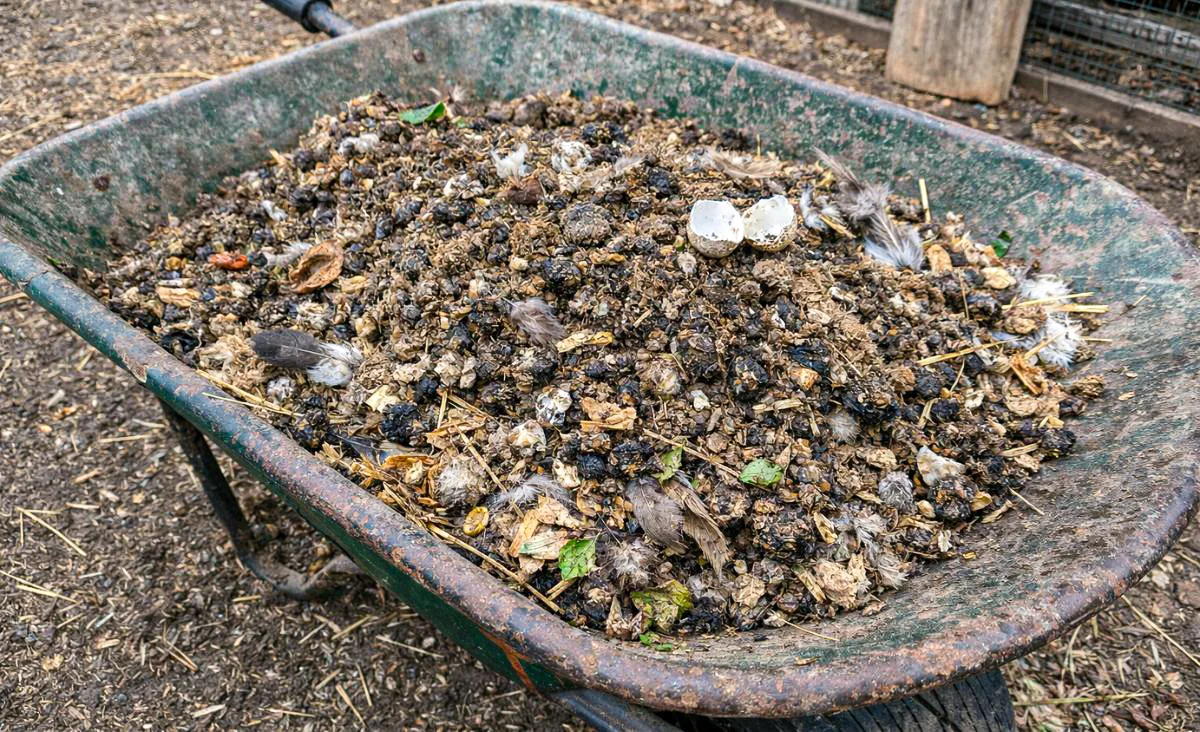
This includes more than droppings by themselves. For most people, raw waste is whatever comes out of the pen or tray before it has had time to break down. That might include manure, soiled bedding, dropped feed, feathers, and the occasional garden scrap or plant material that ended up in the pen. All of that can go into the compost pile, but I still treat the whole mix as raw until it is fully broken down.
How I Compost Quail Manure
My basic routine is to clean trays or bedding, add that waste to a compost bin or pile, and then add dry material if the mix is too wet. Dry leaves, straw, pine shavings, or other carbon-rich material help keep the pile from turning into a wet, smelly clump.
Hot Composting vs. Cold Composting
If the pile has enough volume, enough carbon, and gets turned regularly, a hot pile may be ready in a few months, though I still go by look and smell before I use it. If you are more hands-off, cold composting can still work, but I would expect it to take a season, not just a few weeks. The exact timeline depends on moisture, pile size, how often it is turned, and how much carbon you have mixed in.
For small backyard quail setups, cold composting is common because the waste builds up gradually. For larger numbers of birds, it gets easier to build a pile with enough volume to heat well.
How to Tell When It’s Finished
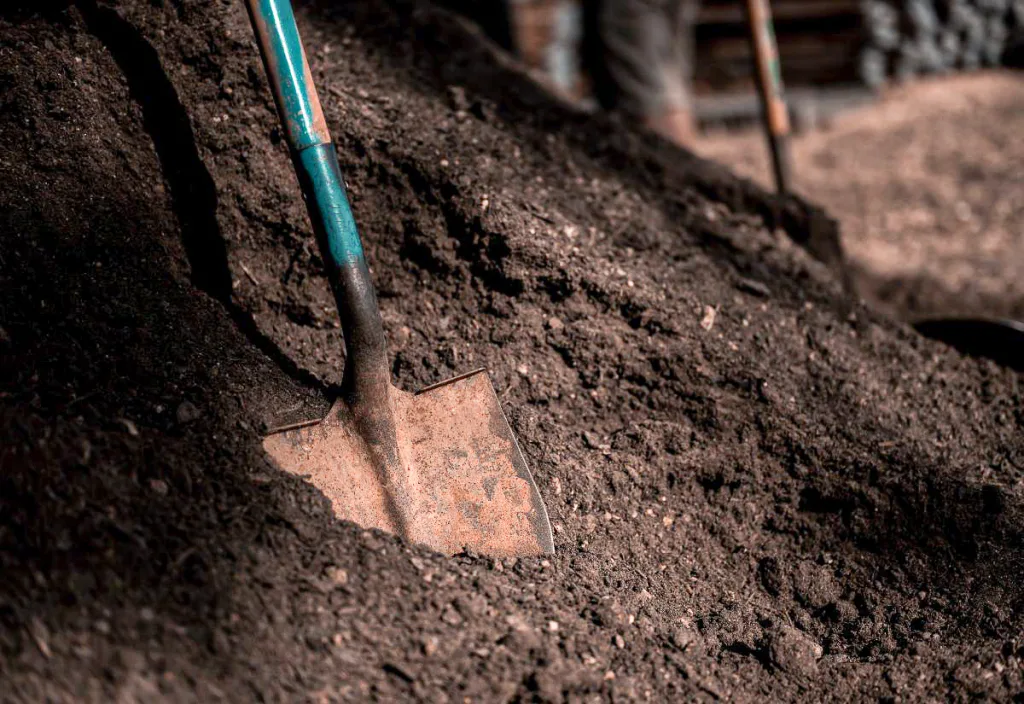
Finished quail compost should no longer look like fresh droppings and wet bedding. It should look dark, crumbly, and mostly uniform, with an earthy smell instead of a sharp manure smell. If you can still clearly pick out fresh manure, soggy bedding clumps, or strong ammonia odor, it is not ready yet.
That part is important. A half-finished pile is still not where I want it if the end goal is vegetables.
How to Use Finished Quail Compost in the Garden
I get better results mixing finished quail compost into the bed or spreading it across the surface than piling it thick around one plant. I like using finished quail compost to improve garden beds before planting, to top-dress around established plants, or to work into beds after crops are finished for the season. It is especially useful in beds that need more organic matter or where heavy-feeding crops will be going in later.
If you are growing vegetables, wait until the compost is fully finished before you use it. I would rather wait longer than risk using it before it is ready.
Common Problems When Composting Quail Waste
Most compost trouble comes from too much moisture, not enough airflow, or not enough time. If it is staying soggy, it may need turning or better protection from rain. If it is not breaking down well, it may be too small, too dry, or too heavy on one material.
A lot of backyard keepers also assume they do not have enough quail waste to bother saving. In my experience, that is usually not true. Even a small covey produces enough tray cleanout and bedding waste over time to make composting worthwhile, especially when mixed with other homestead compost materials. Most people are not trying to fertilize a whole field with quail manure. They just want enough useful compost for the home garden.
Frequently Asked Questions
These are the questions that usually come up once people start thinking about using quail manure in the garden.
Yes, once it has been composted. Raw quail manure is too strong to use fresh, but finished compost from quail waste can be a solid addition to garden beds.
I would not put fresh quail manure straight into the garden, especially around vegetables or young plants.
That depends on how you compost it. A well-managed hot pile may be ready in a few months. A colder, slower pile may take a full season or longer. I go by the condition of the compost, not just the calendar.
You can compost manure, soiled bedding, feathers, and other pen cleanout as long as the pile is balanced and allowed to break down fully. In most backyard setups, the bedding and carbon material are part of what makes the manure easier to compost well.
I treat it with the same kind of caution. Both are rich manures and both are better composted before use. Quail manure comes in smaller amounts for most people, but that does not mean it is safe to use fresh.
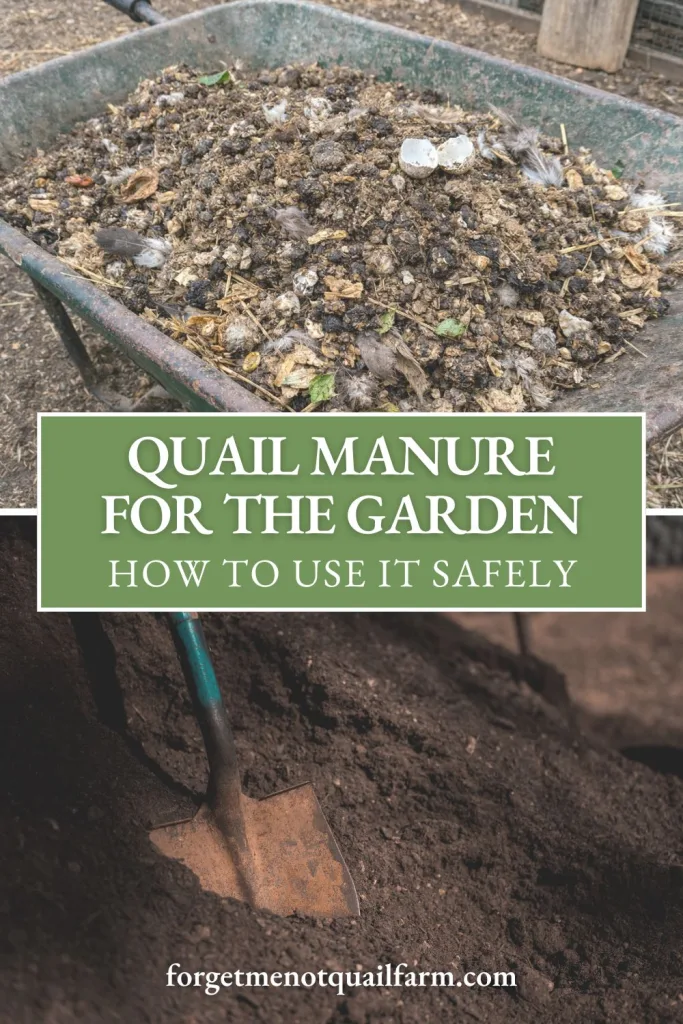
Quail manure is worth saving if you garden. The key is not using it too soon. Once it has fully composted, it becomes a useful way to turn pen cleanup into something your garden can use.
That matters even more on a small homestead where you are trying to make use of what you already have. You are already cleaning trays, changing bedding, and managing waste. Composting it well gives that pen cleanout a job instead of just turning it into more waste to deal with.